

How To Draw Letters In One Point Perspective
What is One Point Perspective?
One point perspective is a blazon of linear perspective. Linear perspective relies on the use of lines to render objects leading to the illusion of infinite and grade in a flat work of art. Information technology is a structured arroyo to drawing. One betoken perspective gets its proper name from the fact that it utilizes a single vanishing point.
Other forms of linear perspective include two point perspective and three point perspective. Each type gets its proper noun according to how many vanishing points are used. The scene usually dictates which type of perspective is used by the creative person.
It should be noted that not all forms of perspective are linear. Atmospheric perspective is used to create the illusion of infinite past manipulating the utilize of value and colour in a scene. Often atmospheric perspective is used in tandem with a course of linear perspective to create a convincing illusion.
Although linear perspective is an effective fashion to create depth in a scene, it is only one of the six techniques an artist can utilise to create the illusion of space.
History
Credit is given to Renaissance artist Filippo Brunelleschi for developing the type of 1 point perspective used by artists today.
The Horizon Line
I point perspective assumes that a viewer is at a certain vantage bespeak and that in that location is a existent or theoretical "horizon line" present. The "horizon line" is sometimes described equally the line that divides the footing from the sky.
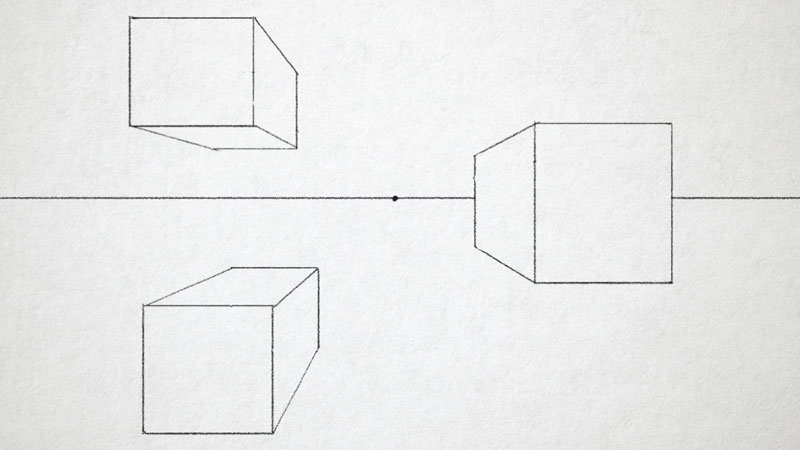
The horizon line is non always conspicuously defined by "heaven" and "basis", all the same. The horizon line can likewise exist the vantage point from which a viewer is observing. For example, the viewer may come across an object by looking upward at information technology or maybe straight downwardly upon it. The object will all the same be viewed in perspective, but the "horizon line" is not the dividing space between "heaven" and "ground" in these situations.
In the following image, the viewer could be looking downwardly onto buildings. In this case, the horizon line does not marker the sectionalisation between "sky" and "footing"
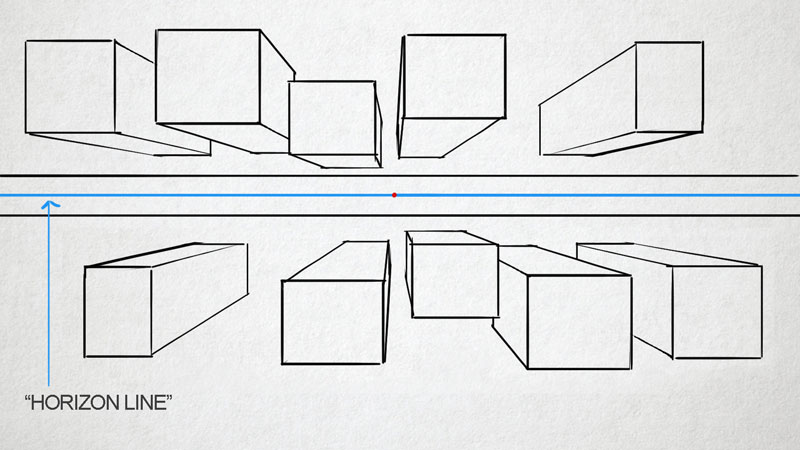
Understanding the horizon line helps the artist brand an informed decision on where the vanishing signal or points should exist placed. A drawing or painting can be created without a horizon line, only its good practice to include one even though it may not be visible in the finished work.
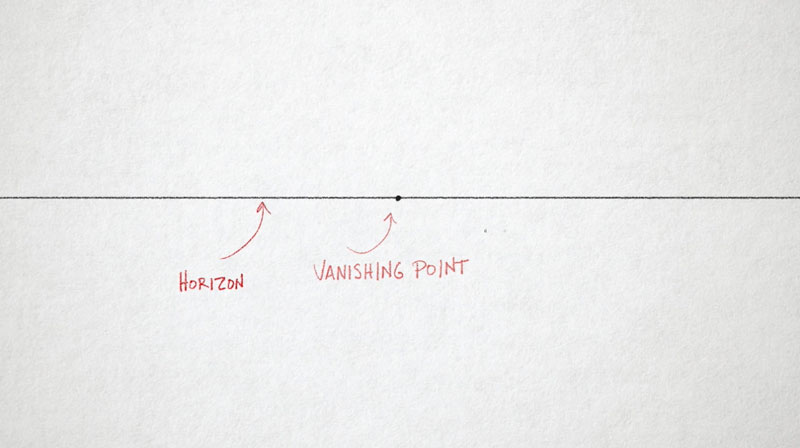
The Vanishing Point
Dots placed on the horizon are called the "vanishing points". 1 point perspective utilizes i vanishing point. All of the lines of perspective will recede back to this singular dot in space. This dot tin best be idea of as the place where objects begin to disappear considering of distance. Some of the lines used in one point perspective will utilize the "vanishing point" as an anchor.
Orthogonals
One time the basic shape of the object is defined, lines that recede dorsum to the vanishing point are added from each corner of the object. These diagonal lines are chosen orthogonals.
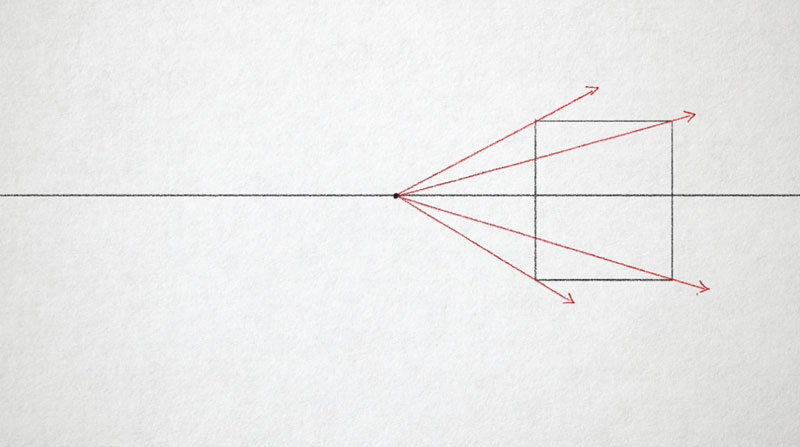
The back "face" of the cube is added by drawing some other square that touches all four orthogonals as they recede back in space.
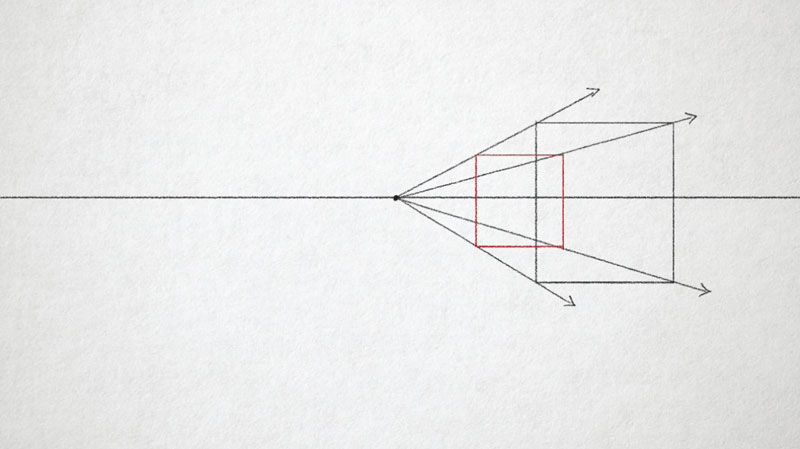
The shape of the cube has now been defined and the lines that were used to draw it can be erased, revealing a three dimensional cube in infinite.
This process is simply replicated to create boosted forms. Each form that is fatigued utilizes the same vanishing bespeak. A new vanishing signal is not created inside the picture airplane.
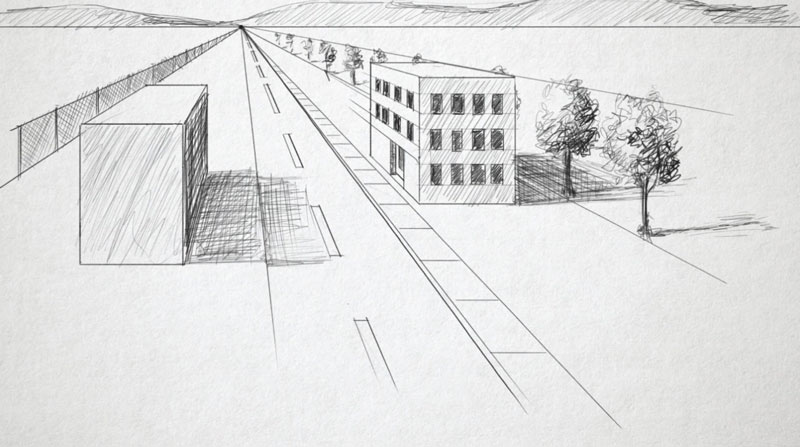
Scenes can become more complex equally more features are added. The illusion of space is maintained by post-obit a structured approach for additional details.
Ane Point Perspective with Interiors
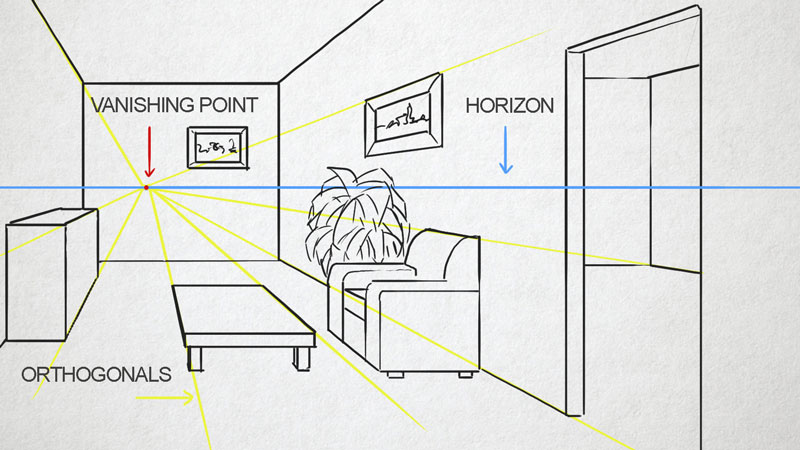
One point perspective is non limited to bones forms and buildings. Information technology can also exist used to depict interiors using the aforementioned approach. A horizon line is defined, although information technology most likely will non be visible in the finished cartoon. A vanishing point is placed on the horizon line, before nuts shapes are drawn.
Orthogonals (receding diagonal lines) are drawn to define the form of the objects extending towards the singular vanishing betoken.
Apply in a Cartoon or Painting
One indicate perspective is used by an creative person when the vantage point of viewer is relatively flat, meaning that the front-facing view of the objects form flat geometric shapes (i.e. foursquare, rectangle, etc.) If the corner of the object faces the viewer, and so two point perspective or iii point perspective would exist a improve choice.
How to Draw in One Point Perspective Step by Step

Begin 1 point perspective by drawing a horizon line.
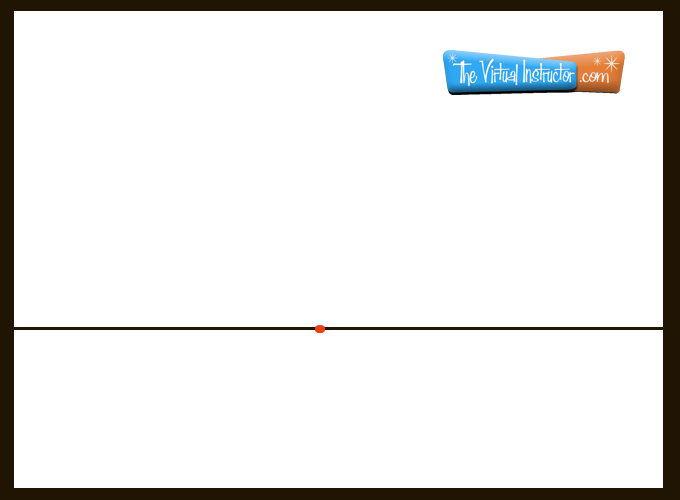
The next step in 1 point perspective is to place a vanishing point on the horizon line.
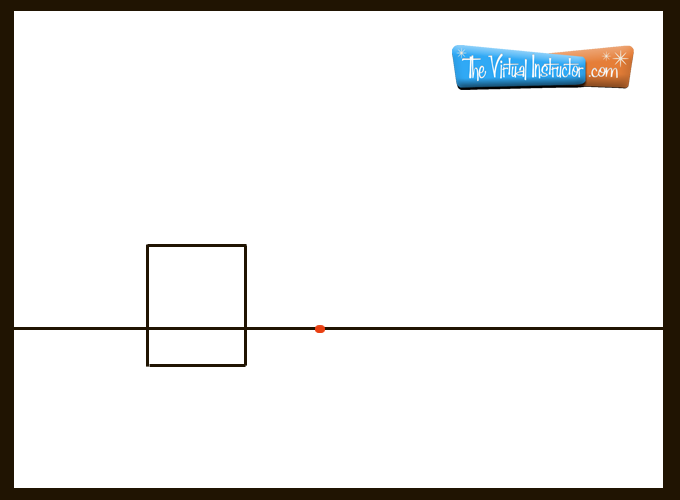
Next, draw a box to represent the building that you want to describe in perspective.
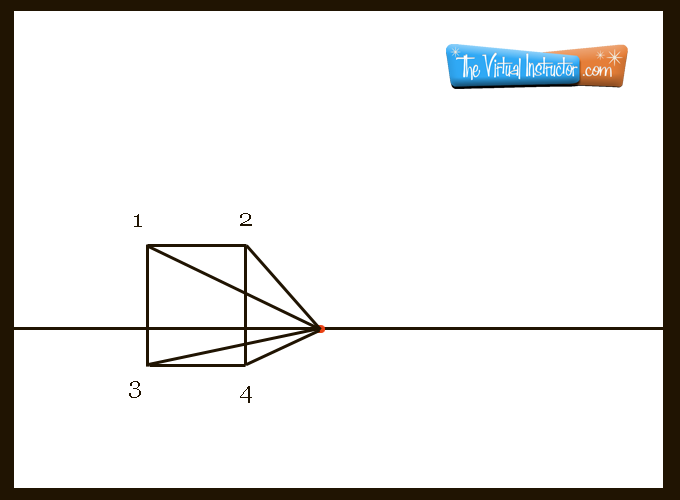
Now, draw lines from all iv corners back to the vanishing point.
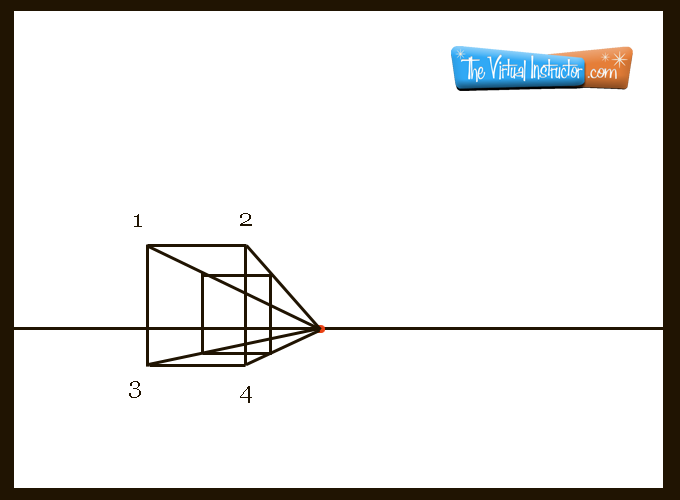
Next, draw a smaller box that touches each of the lines that you drew in the previous step.
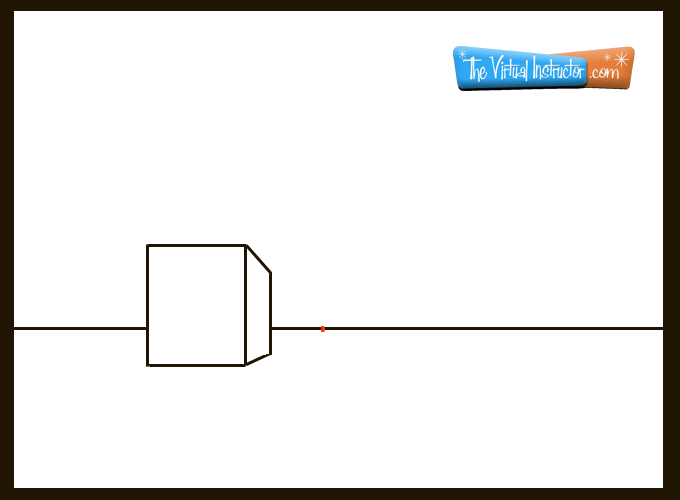
Now you can erase the lines that you lot no longer demand to reveal a 3D course.
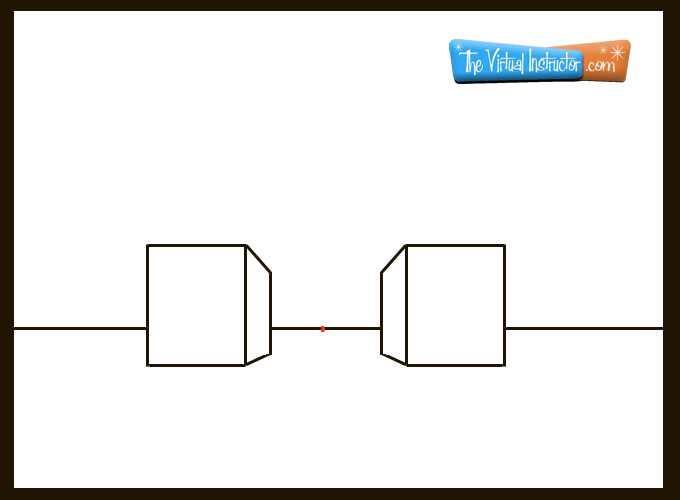
Y'all tin can also add a form on the other side of the vanishing bespeak.

Source: https://thevirtualinstructor.com/onepointperspective.html
Posted by: balesdeally70.blogspot.com
0 Response to "How To Draw Letters In One Point Perspective"
Post a Comment